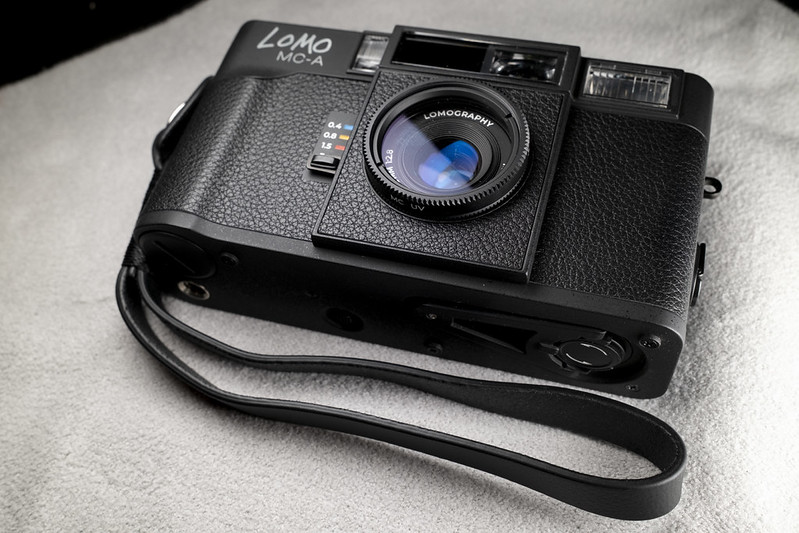
Lomography MC-A: One Week In; The Biggest Surprises.
All Positive.
I already wrote a post addressing a couple/ of doubts I had heard about the MC-A.
Since I had heard of another. The MC-A requires that you wind it twice. I have not experienced this at all. I do have two notes to share. Mentioned in that last post, the first is stated plainly in the manual.
- After pressing the shutter, wait a moment for the camera to finish its business before winding on.
- Ignoring this advice, at worst, causes a lost frame.
- Make sure to wind the lever until it stops.
- If you do not you will likely have an overlapped frame.
That is it. No downsides to make note of. On to the positive surprises.
First up is the biggest surprise.
Lomography made this camera.
I mean this as no insult. It is just that Lomography was mainly known for niche cameras. Ones that relied on unique features and form factors.
To be clear. This is not a complaint. In their own words, this was Lomography’s business model.
“We’ve got a whole range of 35 mm, medium format and 110 format cameras, special panoramic cameras and even DIY kits to build your own analogue snapper! Whatever your style, you’ll find a film camera that suits you.”
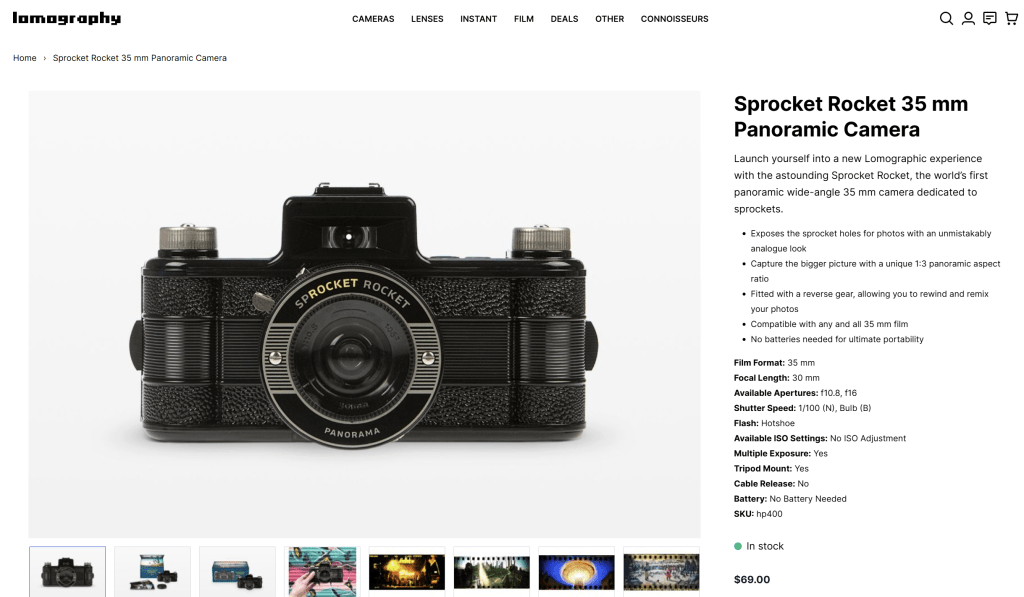
I have thought of trying a couple of them. The two that interest me the most are the sprocket rocket…
…and the other is the Lomography LC-A 120.
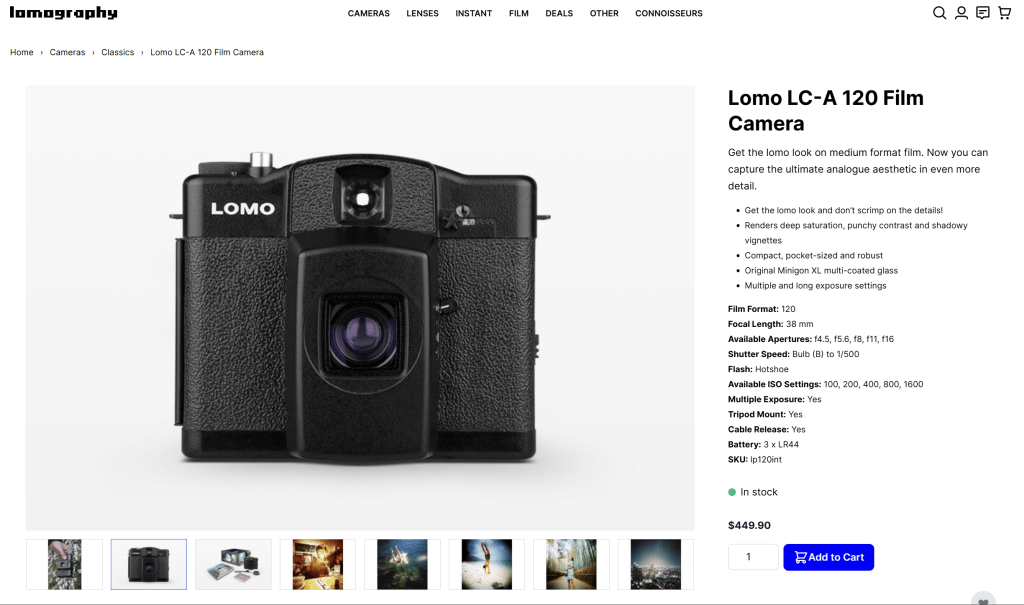
Fine cameras. While these were Lomography’s most capable cameras, they are not “serious” cameras.
- Plastic.
- No AF.
- No auto exposure.
- IQ with “character”.
But the MC-A? Put plainly, it is nothing like their former offerings. In the best of ways.
Let us start with the packaging. Top notch. To recap from an earlier post, it includes:
- Lomo MC-A 35 mm Film Camera
- Naturally.
- Lens Cap
- Left in the box. I use the UV filter and wrap mentioned below when not in use and fear losing it, honestly.
- MC UV Glass Protection Lens Filter
- Installed immediately.
- Protective Camera Wrap
- A lovely thing. Nice touch.

- Detachable Leather Hand Strap
- Again. Nice touch.

- Splitzer Lens Attachment
- Briefly tried below.
- Colored Gel Flash Filters
- Not sure I will ever use these.
- 1 × USB-C Rechargeable Battery CR2 (A regular CR2 battery is included for customers in Asia Pacific regions.)
- Again. Nice touch.
- 10 Declarations of Lomographic Freedom Sticker Sheet
- In box likely never to see the light of day.
- The Lomo MC-A Book
- Impressive little hardcover dealie.
- QR Code Manual Card
- And back to the manual.
The presentation was so good that I was tempted to do an unboxing video. But I resisted. Others online have you covered for that.
But packaging does not make a better picture.
The first Lomography departure.
Feel and build.
Upon picking up the camera, another camera immediately came to mind.

.While not titanium, the MC-A’s materials feel fantastic in the hand. Cool metal to the touch with a nice leatherette that feels like it will be very durable. And I looked up the weight and size and added them to the comparison chart. While the MC-A is slightly larger, I suspect the T2 and other classic point-and-shoot film cameras were the intended benchmarks.
| Contax T2 | Lomography MC-A | |
| Weight | 295 grams/10.4 oz | 332 grams/11.7 oz |
| Width | 119mm | 125.8mm |
| Height | 66mm | 69.5mm |
| Depth | 33mm | 42mm |
| Focal length | 38mm | 32mm |
| Max Aperture | f/2.8 | f/2.8 |
| Built in flash | Yes | Yes |
| Focus | AF | AF |
| Top shutter speed | 1/500s | 1/500s |
| Auto Exposure | Yes | Yes |
| Exposure Compensation | Yes | Yes |
Again. This is far above any expectations based on previous Lomography cameras.
And after some time spent with the camera, what I have to say would have been considered near camera nerd blasphemy to me not long ago.
- I prefer the feel of the MC-A.
- I prefer the switchgear of the MC-A.
- I find them to be better placed and better made.
Manual focus.


The flash has a dedicated button instead of being on the aperture dial.
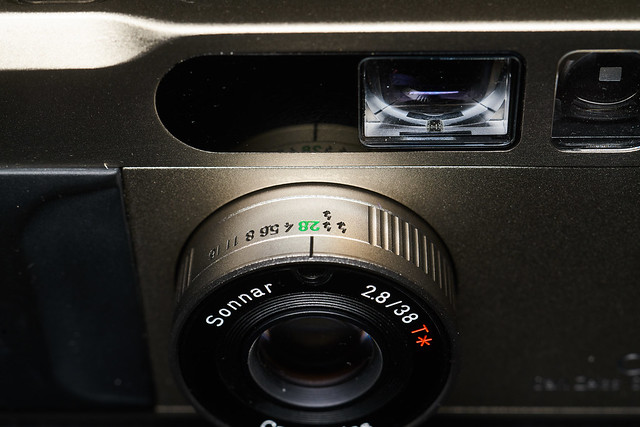

As seen above, the shutter timer and ISO buttons are also preferred.
- The MC-A has more controls.
- In addition to sharing exposure compensation and aperture controls, unlike the T2, the MC-A also has dedicated shutter speed controls and a multiple exposure button. It also adds two timer settings, 2s and 10s.


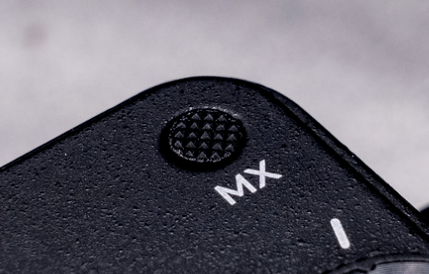
The MC-A even adds a flash sync port.

The information display is appreciated also.

Also, unlike prior Lomography cameras, there are no caveats needed when discussing the performance of the lens.


Two things that it lacks I have no issues with.
- No auto rewind.
- No auto wind.
To which I say…
Thank goodness.
Those happen to be the two things that worried me most on the T2. And it makes the MC-A a bit quieter.
So what of the others? The other new premium-ish cameras that have come to market in the last year or so?
Not built as well as the MC-A and lacks AF and has fewer direct controls, but…
The Pentax 17 is slightly less expensive and is a diptych good time in the form of a camera.

Not built as well, has more teething issues, and costs more but…
Come on! Gary at Mint reached into a void of nothingness and pulled out a brand new auto everything little beauty with one of the best lenses I have ever used. And it is fun to use.

(Good times!)
I still like them. But if I had to choose between them, the MC-A would be my first choice. I say first choice, because I like them all.
Plus, have you looked up the prices of the classic used point and shoot film camera alternatives lately?
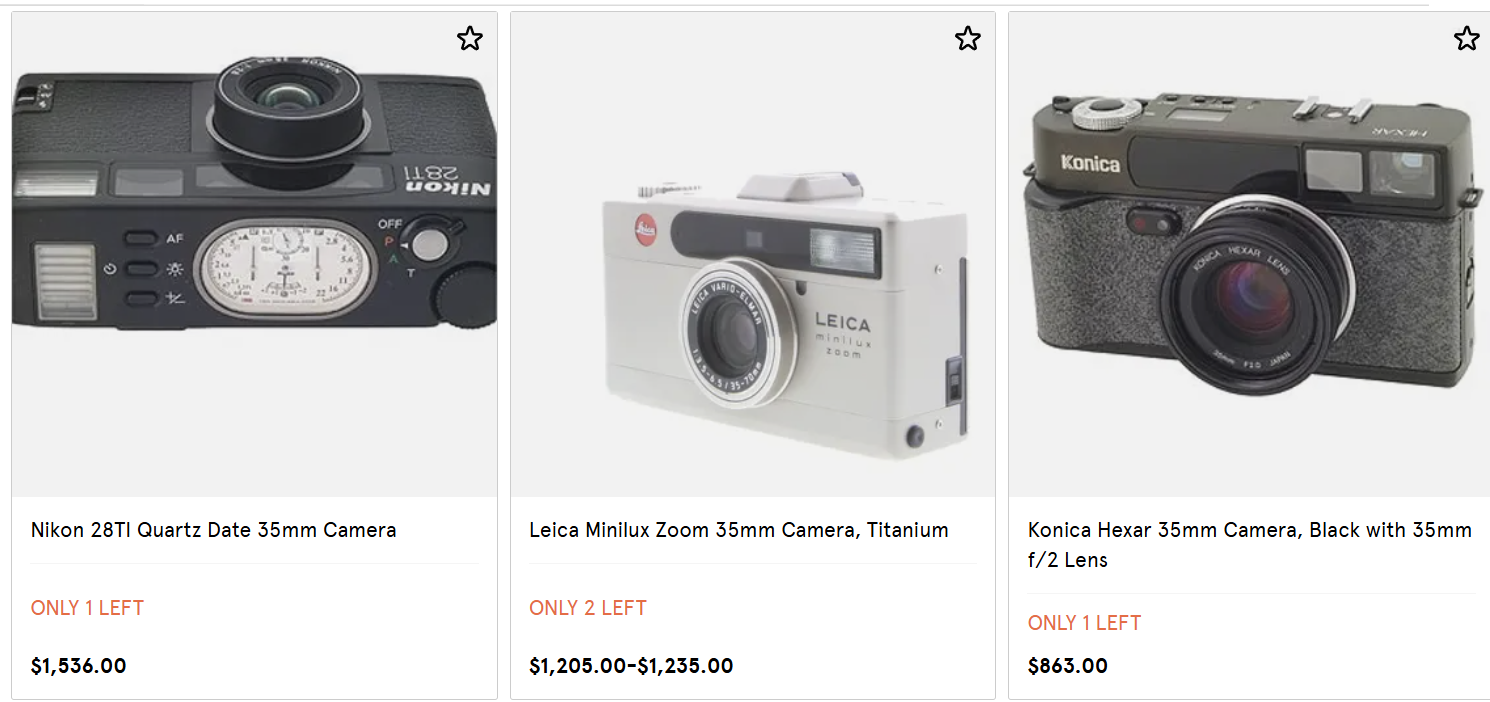
That could break at any moment? With no warranty? And ALL of these new cameras are less expensive? Good times.
I leave it to others to have this thing is better than that thing conversations. Money tree in hand I would own all of the cameras.
So…
What am I saying? Welp.
Ok. I have one minor issue. That script on the top.

Fortunately, it was easily dealt with using some gaffer tape.

Moving on.
Well done, Lomography.
You have done a wonderful thing here.
After the close, I will share my favorite images from the first five rolls.
Happy capturing.
-ELW


 Eric L. Woods
3 Replies to “Lomography MC-A: One Week In; The Biggest Surprises.”
Comments are closed.