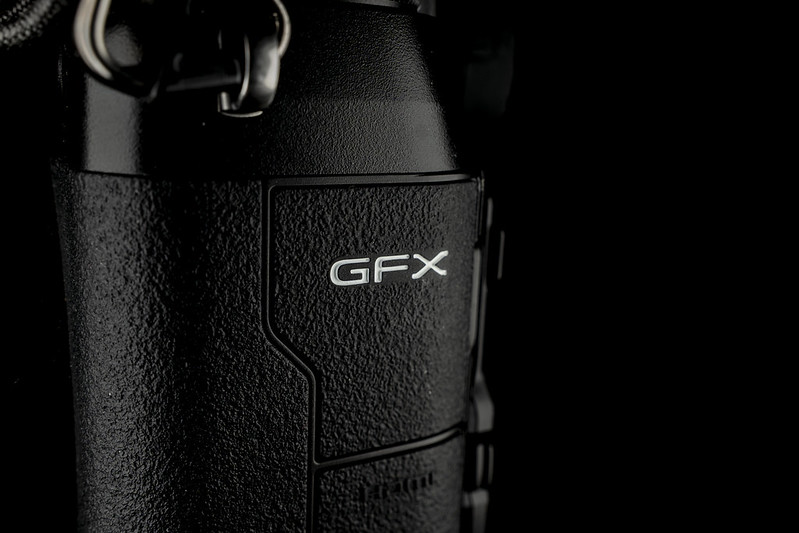
Week 1 WIth The GFX System: What I Have Learned So Far.
Warning:
I started this expecting to list maybe 5 or so lessons. As I thought about it more and as I gained more experience while working on this post it had grown far longer than I expected. While I did not intend for it to be as long as it has become splitting it up into more posts seemed to make no sense either. So… You have been warned. This is a ramble fest. Proceed at your own risk.
Preface:
None of this is necessary. A 50MP or 100MP sensor. A medium format sensor (Argue amongst yourselves regarding the validity of this claim to sensor size compared to film. I am fine calling it whatever they please.). But here we are. Put plainly I wanted in. Ground rules established that all of this is nonsense and likely just a means of me distracting myself from the world being on fire, here we go.
You cannot discern everything from reading everything you can find about a product, or even trying one out in hand at your local camera shop. This leads me to lesson 1 and 2.
Lesson 1.
More broadly beyond the GFX, reading reviews may not be as helpful as you think.
This has been confirmed by my most recent experience with the GFX system. I read about this system a lot. But there is one issue with this. What is read, by default, has been processed through the mind of someone else. We are all different. Try to be as impartial as we can but our personal preferences and opinions will bleed in. It just may be phrased in a way so as to mimic impartiality. Caveats and qualifiers, like my oft-stated “Whatever floats your boat.”, “You do you.”, or “Your mileage may vary.” do not fully offset the effects of one’s own experiences and proclivities. In the end it turns out that many of the articles and reviews I took in were not all that helpful. The things that mattered to me the most were not touched upon. No fault of the writers. Put this down to us all being different people who see things differently and have different priorities.
Lesson 2.
Testing a camera briefly in hand may not be as helpful as you think.
I also must acknowledge that briefly test-driving a camera in my local camera shop was not as helpful as I had thought it would be. The main culprit was this. I had the mistaken impression that there was some parity in performance across the GFX lineup, but…
There is a sizable gulf between the performance of the 50R and 50S II, the two cameras I had in my sights, and the 100S and 100S II, which seemed hopelessly out of reach. Specifically, the comparison here is between the 50S II and 100S. Perhaps fooled by them having the exact same body, to the point that there are no markers on the body to distinguish between the two that I see, I thought they were in the same performance ballpark. And I am not talking about the obvious 50MP vs. 100MP. The main culprit here was the autofocus.
Twice I marched myself into my local camera shop and compared a Sony lens (50mm f/1.2 GM) and camera (A7RV) side by side with a GFX 50S II and GF 80mm f/1.7. I was drawn in by the allure of that additional sensor surface area. And as much as made no sense there was a moment there a while back when the price of the cameras and lenses combined worked out to less money for the GFX kit. This set off the little “Trade everything! Get me that GFX!” monster in my head, but there was a problem.
As expected the Sony kit hit the AF mark and shuttled those bulky bits of glass silently and immediately. I tried the same test with the same subject with the GFX 50S II and the GF 80mm f/1.7, and… well… bless its heart. Slow and clickety. That is when the logical side of my brain reared up and told that little monster to go somewhere and sit down. I did this twice. Same result.
This is by design. The 50 bodies are meant to be lower-cost options and as a result, have lower specs.
But when I went in last week and tried out the GFX 100S with the 50mm f/3.5 it was a whole different experience. The camera and lens combined for a swift, accurate, and silent AF experience. As speedy as the best out there? No, but more than close enough for my purposes.
Curious whether this was more down to the camera or lens I tried the GF 80mm f/1.7 with the 100S and it was much better. Still a bit clickety courtesy of the lens’ AF motors but focus acquisition was near immediate and much less noisy. Likely owing to no back-and-forth contrast AF only shenanigans. So, will I get the GF 80mm f/1.7? No. Mainly for two reasons:
- As much as I adore this little GFX journey it is not my main system so I cannot justify such a large outlay for a lens solution I have covered elsewhere.
- Courtesy of the manual focus details I will discuss below I am perfectly happy getting a manual focus lens in that same range, which will cost far less.
But back to the lesson. The GFX50S II is not a fair measuring rod to determine whether or not a GFX camera would work for you. One should try out a GFX body with phase-detect AF before making a decision.
Lesson 3.
If done right GFX could be my main camera system, with caveats, or a mixed main system.
Had thought that GFX was prohibitively expensive across the board, but if one can show some level of restraint a main system could be had for around the same outlay as a more conventional sensor-size solution.
The caveats.
Fewer lenses.
I have messed around and gotten attached to some pretty great glass on my main system. Factoring in the price of new GF glass I would need to be much more selective and settle on two AF lenses. Also there are some lens specs that are simply not available for GFX. Take Tamron’s excellent 35-150mm for instance. This goes for any brand other than Sony and Nikon but this is my go-to lens. It pretty much stays welded to the front of my main camera body and always delivers. It would be hard to let go of.
Lower performance, speed mainly.
Yes, the IQ output is nothing short of stellar but even the best focusing GFX cannot keep up with proceedings like other options on the market. I could make it work, but I would go in knowing that some shots will be missed. Not a big deal for portrait where you are free to repeat a moment until you get the shot and other slower paced work but this could be an issue for events, especially weddings.
So, as a main system for portraits and such, assuming weddings are not on the table.
- Main Body.
- GFX 100S.
- Main Lens.
- GF 110mm f/2.
- If portraits are the main goal. Personal preference over the more clickety 80m f/1.7.
- GF 110mm f/2.
- Secondary Body.
- GFX 50R.
- Personal preference. Another GFX100S would make more sense, but I like the way it looks.
- GFX 50R.
- Secondary Lens.
- GF 50mm f/3.5.
- A great little all purpose lens.
- GF 50mm f/3.5.
Could GFX be used for a wedding? Certainly. I would rather not though. Instead, I would go for a…
Mixed system.
- Main Body.
- Any Sony full frame body A7III or newer.
- Main Lens.
- Tamron 35-150mm f/2-2.8.
- Secondary Body.
- GFX 100S.
- Secondary Lens.
- GF 50mm f/3.5.
- I am truly smitten with this lens.
- GF 50mm f/3.5.
What are we up to now? Right…
Lesson 4.
One should not discount discontinued bodies.
I knew this already, as I regularly catalog the virtues of “vintage digital” gear in this space, but one should not think less of a camera just because it is no longer in production. For the common reasons:
- Value.
- Older, used gear costs less.
- The high performance bar.
That last bullet. Personally, the specs needed for my use case were passed years ago. As mentioned above any Sony body A7III or newer will work for me. It has resolution enough. It is fast enough. It has good enough low light performance. It has good enough image quality. I do not need bleeding edge tech. Along those lines this GFX100S does just fine. Not once in the last week did I think, gee I wish this camera did XYZ. The best testament to the capabilities of this camera is that I put no thought to its capabilities at all. It just did what I asked of it.
Lesson 5.
I get the 100MP thing now.
Is it necessary? No. Many times in this space I have stated that I do not need any more than 24MP and often times I can make do with even less. Do I still like having it? Yes.
Many speak of a zoom lens being like having a bag of primes. There is something similar at work here. The bag of primes most often applies when you need to focus on subjects near and far. But when your focus is an entire scene, as is often the case with hyperfocal distance as I often do with one of my favorite manual focus lenses, many framing options become available. For example I took a quick pic in passing the other day. It is a scene I have photographed time and again while passing by. But when editing this file I noticed something. I had enough image information that I could crop quite deeply into the scene while retaining an amazing amount of detail.
First the uncropped image.

Next my first crop.

Now the last crop into that last crop.

Admittedly not a shocker. That is what one would expect from a lot of MP. But nice to experience nonetheless. Here is another example where I noticed a kite far off in the distance while passing. Here is the uncropped image.

Here is the first crop.

And here is a crop of that crop.

Necessary? No. Does it make me happy? Yes. Here is another. Uncropped image.

Crop.

Moving on.
Lesson <scrolls back up to check> 6.
The clouds. The beautiful clouds.

Not a lesson really, but just wow. I do not know what manner of sorcery is going on here. I mean I hear Sony makes the sensor so what gives? Why do the clouds and skies look so cuss word amazing? The clouds with my Sony cameras do not look bad. For example:

But they are nothing like what I see coming out of this GFX sensor. I am sure some manner of nerdery can explain this. Perhaps the sensor itself is the cause of this. The added real estate, some manner of tech added here not available on smaller sensors. Maybe even some manner of FUJIFILM software wizardry is at work. But I have had many FUJIFILM digital cameras before, five APS-C bodies over the years to be specific,…

…and do not recall being so impressed by the skies. The main factor at play is an amazing dynamic range I am not accustomed to. In many pics the underxposed foreground is often in shadows while the sky will have blowouts. No so here. Everything is exposed properly. No need to employ spot adjustments. It just comes out right and I am here for it all day. Perhaps this is user error (me) and there is some way to emulate this elsewhere, but I am impressed nonetheless.

Lesson 7.
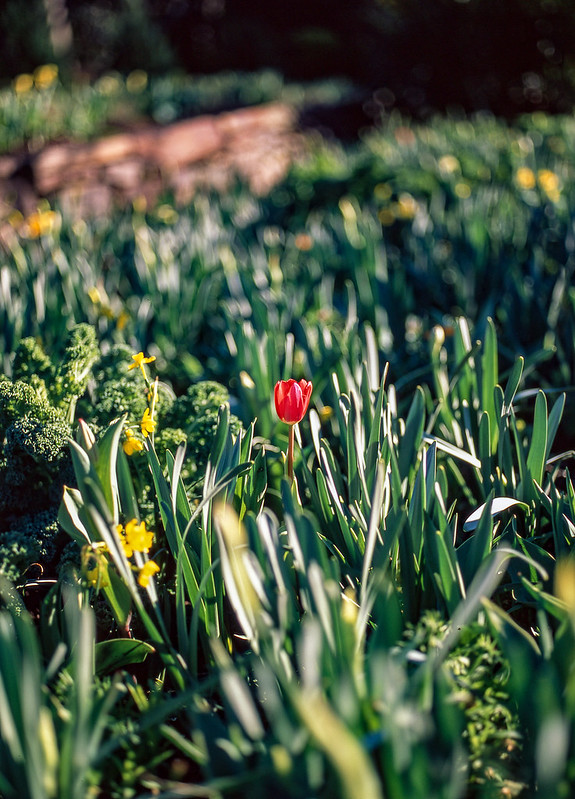
A rinse and repeat of my sentiments above, but wow the colors. I use and edit RAW files so I have never been one to get all brand happy about colors. I can get where I want to go with any brand. But these RAW files here? They give me a starting point way better than I am used to. And I had no complaints. I just had no idea that there was something better. For example I was simply blown away when this photo came up in Lightroom.

I have taken a shedload of flower pics at Duke Gardens over many years.

The only other picture I ever remember stopping me in my tracks like this one was taken using medium format film and slide film.
Lesson 8.
I should have listed this and the last few under Image Quality, but I am too far down this road to stop now.
Sharpness.
Largely to do with the lenses admittedly. But there is no denying this sensor does a fine job of squeezing an alarming amount of detail out of lenses that were not made for it.

And while we are talking about lenses…
Lesson 9.
Stellar manual focusing aids.
I can only blame myself but after years of reading about this system and using APS-C cameras from FUJIFILM I had no idea that FUJIFILM had implemented a two screen manual focusing aid that provided nearly all of what I love about using rangefinder cameras. Namely simultaneously being able to frame and focus at once while manual focusing.

Framing window on the left and focus magnified and focus peaking window on the right. Shown to me by Katherine at my local camera shop it immediately…
- Removed any reservations I had about trading my rangefinder kit towards this camera.
- Meant I could hold on to my favorite M mount glass.
- Provided an even more interesting experience by using already fast glass on an even larger sensor with minimal vignetting. More on this below.
The only thing lost is a rangefinder’s ability to see outside of the lens’ field of view. But I tend to shoot with both eyes open so this is not as much of a hindrance as I thought it would be.
This manual focusing aid also gave me the confidence to pursue a manual focus portrait lens in the form of a used TTArtisan 90mm f/1.25. And after the first tests…

…I can say that this will do just fine.
Lesson 10.
Full frame lenses are more useful than I thought they would be.
I have seen and heard that there are lenses where the image circle does not cover the GFX sensor. But as luck would have it my two favorite M mount lenses play just fine with this sensor. Often times little or no vignetting is seen…

…and when it does show up, I rather like it.

And this is interesting, because when I was sharing these images with a staff person at SE Camera he commented, “But you are not getting the full medium format look by using the whole sensor.” That is when I shared with him that I turned off the 35mm crop so all of these pics were using the full sensor. So along with the GF 50mm f/3.5 AF lens right out of the gate I kept both my 28mm f/2 and 40mm f/1.2 lenses. Nice.
Lesson 11.
Low light performance.
This one is a late add on. Discovered on my weekly trip to chorus rehearsal. On the way home every week I take the same photos. For reasons. Usually the images are grainy mess requiring a hit with the LR AI Denoise stick. Have even written articles about such.
No such tricks are necessary here. In the interest of full disclosure I did set my burst memory slot 1 to JPEG and not RAW so perhaps this has to do with the denoise FUJIFILM employs on JPEGS but there was no need for any LR adjustments other than the clarity slider. No LR AI Denoise or other adjustments were needed. And these are photos purposefully taken flippantly at absurd shutter speeds for the conditions and sky high ISOs. I expect a ton of noise. But not here.


Respectfully what in the whole heck? If it does this well under such an abusive use case I imagine creating clean low light images under proper conditions… like standing still and not holding the camera at arm’s length… would net fantastic results. Nice.
Lesson 12.
Superior results, with a very normal user experience.
Take everything above in and then consider this. This GFX camera does not ask a lot of me.
Controls.
The user experience is straightforward, especially if you have used FUJIFILM cameras before. It is just a beefier variant of their APS-C line up in use.
Ergonomics.
I cannot say enough things about this camera’s grip. Nearly perfect.

Add in things like the tilty-flippy screen…


…second best only compared to the wizardry Sony pulled off with the A7RV flip every which way screen, a great top plate secondary screen that is versatile, and well thought out,…


…many, many dedicated buttons where most can be reprogrammed, and this bests any camera I have ever used before. Including FUJIFILM’s own APS-C line of cameras.
Performance.
Unlike another system I traded few compromises are asked of me. Yes, understandably it takes a beat to write data to the old as dirt SD cards I had laying about, but it is not bad considering, I could easily improve the times with some newer, faster cards.
Other cameras I had where I also prized the unique images they produced <cough> Foveon <cough> asked for a lot of compromises. The camera does not shut down menu access and image viewing when writing to the card. Write times are far more reasonable. It has video… You get the point. Great gains with little asked of the user.
Size and weight.
Considering what it is this camera is barely any larger than a full frame mirrorless camera, and not much heavier if at all.
Innocuous.
I evidently stumbled upon Duke Gardens recently on “Everyone And Their Mother” Day. A shocking number of people actually. I think it had to do with blossoms. I was just there to test my new toys… gear and was a bit overwhelmed. All was well and then I noticed something. Other cameras I have carried occasionally become camera nerd beacons, drawing folks to me asking about them or just calling them out. “Is that a Leica-blad?” While I do not mind the occasionally conversation or shout out I prefer being able to roll through a scene where no one gives me a second look.
Lesson 13.
It may be the perfect compromise between all of the cameras I adore.
Leica M.
It makes use of the M glass I have with ease, and looks good doing it.

And when used with these lenses in full frame mode it even matches the MP count of the latest, far more expensive Leica M bodies at 61MP.
Foveon.
It provides a unique and elevated image capturing experience with great colors and rich details like Foveon cameras.

Film.
The images produced often remind me of medium format film cameras.

Other medium format offerings.
I once really wanted in on Hasselblad X cameras. But after using this GFX100S I am good. I see no reason to go with another solution. And the others are far too expensive to be considered honestly.
Other GFX cameras.
The GFX100S is the sweet spot in their lineup for me. Better AF and higher resolution than the 50MP variants, at not much more spend. Most of the features of newer or higher models at a lower price point. The Goldilocks choice of the bunch.
Full frame bodies.
While not matching the speed and flexibility of modern full frame offerings I would not deem it a penalty box either considering the elevated image performance. And while we are at it…
Lesson 14.
It is an elevated image platform.
I have written before in this space that I wondered if there were any real gains to be had over modern high MP full frame cameras. I no longer need to wonder. There are image capturing gains.
Whether it is better enough to offset the higher price of entry, slower performance, and limited and more expensive lens selection is a question each person has to answer for themselves.
Lesson 15.
Depending on use case I would consider the GFX100S to be a good value.
Stop laughing. I mean it. Please notice I mentioned just the GFX100S. The other cameras in the line up are great, but the GFX100S is the bang for buck champ in my opinion, with one caveat.
Your main aim is portraiture, or maybe also landscape work but that is not my jam.
The reason is simple. Used it currently goes for about the same amount as my personal full frame champion, the Sony A7RV. But it has…
- Many more MP.
- IBIS also.
- Serviceable AF for portraiture.
The same cannot be said for other GFX bodies. Most either lose features like IBIS, MP count, and phase detect AF or cost significantly more. Are they worth it? Yep. But the GFX100S hits a price for performance balance that speaks to me.
As mentioned above it also mimics a rangefinder focus experience close enough to take a Leica M body off of my wish list. Your mileage may vary but I would rather have the GFX100S and a few thousand left in my pocket.
It also squashed my prior minor obsession with the gorgeous, far more expensive Hasselblad X system. I would not trade it for that system. There is not enough Hasselblad pixie dust in the world to counter the unfortunate combination of higher price and fewer features.
Ok, I have to stop this at some point. I could go on.
Is this the best or perfect camera?
Again, and always no. No such thing exists.
There are too many use cases, price considerations, personal preferences etc. for that to ever be a thing. And that is good. Choice is what makes this fun to me. I do not want all cameras to try and do the same thing or meet every need. I love the variety.
But what they have created is a direct hit on this camera nerd right here.
This camera is a nearly perfect melding of everything I love about photography.
Your mileage may vary.
Happy capturing.
-ELW

 Eric L. Woods
43 Replies to “Week 1 WIth The GFX System: What I Have Learned So Far.”
Comments are closed.