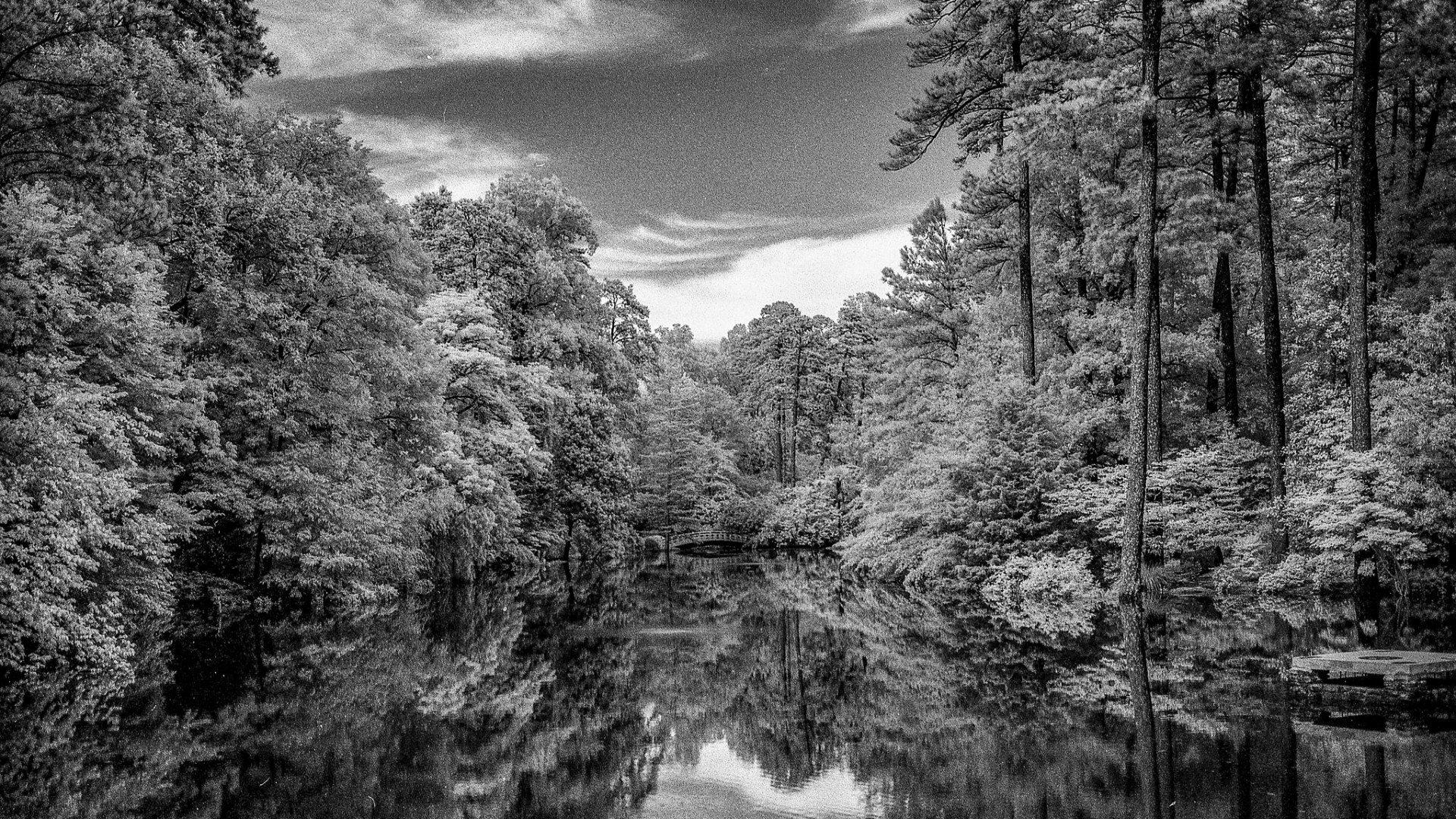
User Error Redemption/Film Test: Rollei Infrared 400 – 120 Format.
I recently wrote a post detailing my first and failed attempt using this film, User Error Files: My First Attempt At Infrared Film Photography. It was my fault and I owned it. But that still made me a bit apprehensive about charging back into trying the film again. I had bought a second roll as backup but given my astonishing luck with film I did not expect to need it. I was wrong. That run of luck caused me to be far more flippant than I should have been resulting in a blank roll of film. I learned my lesson… Kind of.
There are tips I still did not follow. I am no rebel. I just did not want to. So I tried workarounds that fortunately worked out. First I will talk about the user error redemption and then my remaining stubbornness.
Disclaimer: This is a first world problem post for sure. An intentional distraction from the insanity out there.
User Error redemption.
After finding out the hard way that the Fujifllm GA645 does not meter through the lens,…

…I employed exposure compensation. 5 stops of compensation was needed. It took a combination of ISO adjustment and exposure compensation. Neither would get me to 5 stops by themselves. So, instead of ISO 400 I brought the camera down to ISO 50, or 3 stops. So on top of that I added 2 stops of exposure compensation for what would be about an ISO 12 equivalent. It worked.
My remaining stubbornness.
Many detailed the challenges of using Infrared film. I will list them and how I addressed or outright ignored them.
Focus/composition blackout.
When using the required 720 filter…
Nerd sidebar: Skip if you are hip to this already. Infrared is a range of light that cannot be seen with the human eye. The main party piece of this range of light is that things that reflect this range of light like skin, plants, trees and such will glow white and items that this range of light will pass through unreflected like the sky or does not reflect it such as eyes, buildings, and other like objects will appear dark. But, used as is this film will look like any other black and white film because it will also see what we see. So a 720 filter is needed to block the light that we see and bring out the Infrared look. Or what is called the “Wood Effect” named after photography pioneer Robert W. Wood. No ‘s’, no relation. Also an interesting coincidence given the appearance of trees with this effect. Makes more sense when you see it. If your head is exploding because of technical inaccuracies, my bad. This is my swipe at a brief overview. If you have fallen asleep a few times while getting through it, my bad. Anyhoo. Onward.
…you cannot see through the lens to compose or focus when using an SLR.
Blur.
When using a 720 filter so much light is blocked out that potentially blur inducing slow shutter speeds are required.
Exposure anxiety.
Many noted that bracketing, taking multiple pics over a range of exposures, is highly recommended since 5 stop compensation may not be exact.
Focus.
Because science infrared light focuses at a different distance than what we see. Something longer wavelengths something something. Interesting reading but not readily retained when teamed with my short attention span. Some old SLR lenses have a red dot that denotes the Infrared focus point on the distance scale so you can do infrared zone focusing. If you cannot or choose not to do this a recommendation is to use a small aperture like f/11 so that more is in focus. This will slow shutter speeds down into many seconds territory.
So the SLR process that is recommended is this:
- Use a tripod and shutter release cable.
- Choose your scene and set up the tripod.
- Remove the 720 filter.
- Focus and compose.
- Put 720 filter back on.
- Press the shutter release.
- Repeat for bracketing.
Yeah. That sounds like the utter opposite of a good time. So here is how I attempted to address each point.
Focus/composition blackout.
Use rangefinder-ish AF cameras. Or any camera where framing/focusing viewfinder is not using the taking lens. So a TLR would work well also then.
Blur.
I chose to use old school bracing techniques and hope for the best. Offset footing, take on the inhale, and such.
Exposure anxiety.
After much reading I chose to just go with plus 5 exposure compensation and leave it at that.
Focus.
I ignored the whole small aperture thing and chose to just go with whatever focus the camera acquired. Close enough would be good enough.
So the process went like this:
- Put on 720 filter.
- For TTL let the camera at it, like I did using infrared-ish film and a red 25 filter, otherwise dial in 5 stops of exposure compensation.
- Brace myself and monitor my breathing if the predicted shutter speed crept lower than 1/30 of a second.
- …that is about it.
But that is not the full story.
Development.
Interestingly Cinestill lists Rollei Infrared 400 as pairing well with Cinestill df96 monobath, which is the only B&W developer I have ever used. But it is not listed on their film chart and I could not find it listed anywhere on the interwebs that I could find. I even emailed Cinestill and someone I actually know wrote me back,…

…which is cool, but he was not sure so he will look into it. Cool. But I am impatient. In the end after seeing df96 mentioned in this Rollei Infrared 400 video from Cameron Zamot I went ahead with his advice. Double the development time.
The result? Success.
Went to my regular test bed, Duke Gardens. Here are all 16 frames.


Thoughts.
I like this film a lot and will be using it again.
Happy capturing.
-ELW

 Eric L. Woods
One Reply to “User Error Redemption/Film Test: Rollei Infrared 400 – 120 Format.”
Comments are closed.