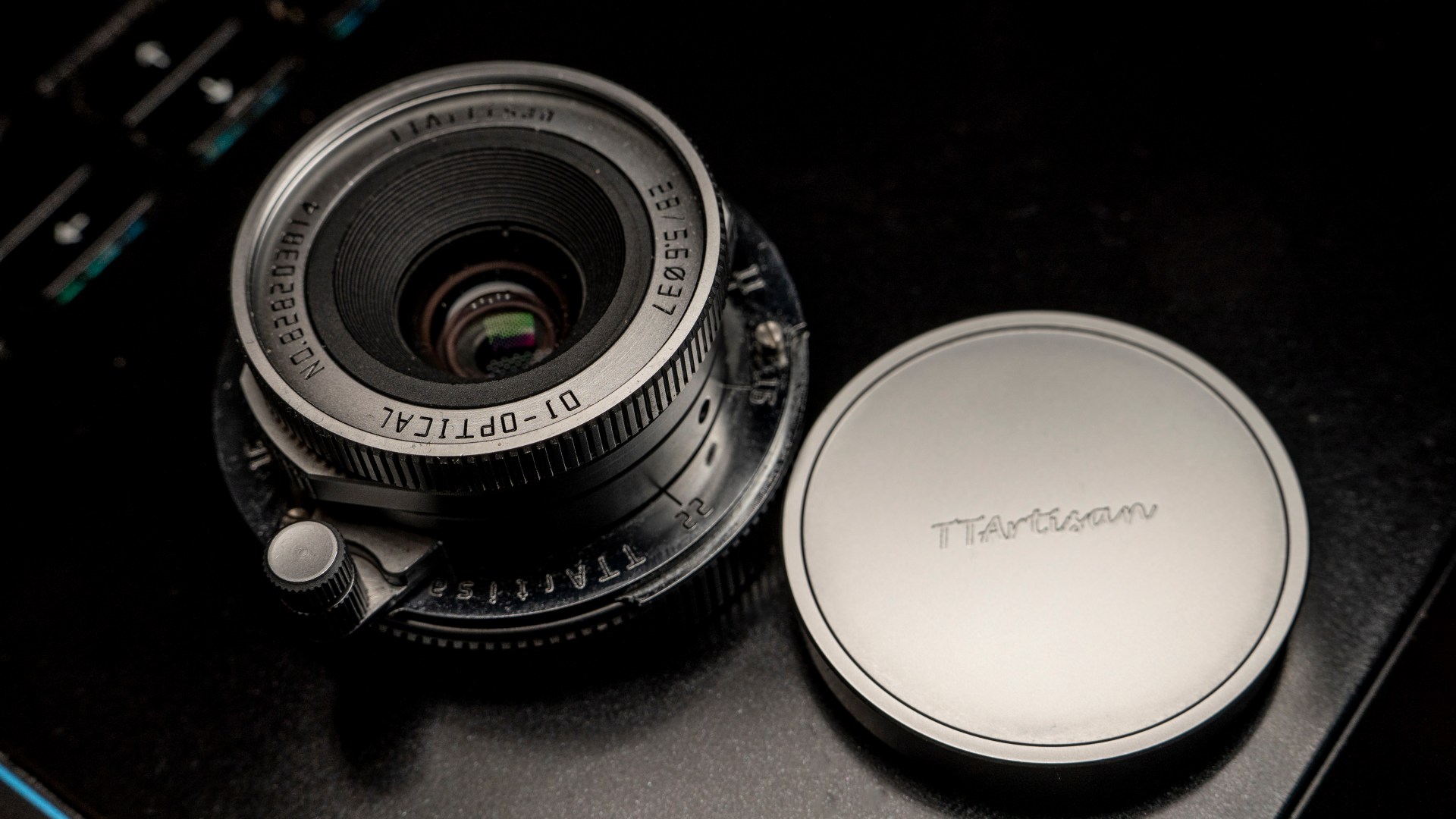
I recently trucked out a favorite of mine that is quite a looker.

It sent me down a path of reconsidering gear. Specifically the significance of simplicity when it comes to gear. But first, let me give a recap on my prior thoughts regarding this lens.
An M mount lens that is a dead ringer for the Leica original, the Leica Summaron-M 28mm f/5.6, for a tenth of the price. Nice. TTArtisans it is. Is the TTArtisans lens as good? I suspect not. But no one is cross shopping lenses with a ten times price difference between them. This is not an issue for me. Based on my experience with other third-party M mount lenses, like the Knock-off-tilux 50mm f/1.1, Semicron 35mm f/2, 28mm f/1.4, 75mm f/1.25, 35mm f/1.4 all from 7Artisans, and most recently TTArtisans 21mm f/1.5 it would be close enough for me.
Once on my radar, I had no immediate plans to acquire the TTArtisans 28m f/5.6 initially. Then comes KEH. I used to write for them but I have been a customer well before then and remain a customer to this day. A “Like New” copy appeared at a further discount and I jumped on it. They said it came with caps, but the packaging, hood, and all were included. Nice.
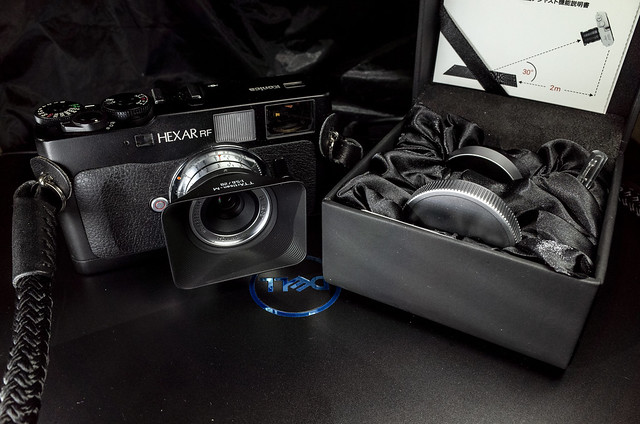
It feels and looks great, has great accessories, and creates great images with film.

I mentioned previously that it works well adapted to the Sony A7C. Especially when using the close focus M to FE adapter.


Handy. But it feels most at home shooting natively on Digital M.

Below I will repeat sections from the earlier film and digital posts adjusted for digital M.
Shooting experience.
Lens specific so no change here. Aperture clicks are distinct and the focusing lever locks at infinity and has to be pressed to release it. Have had this lens for a minute now, and I must say that I continue to be impressed by how well it is put together. No way would I peg this as an inexpensive lens by looks and feel.
The TTArtisans 28mm f/5.6 also creates a fine video…
…even using the one and only M to ever shoot video, which was quickly amended because an M shooting video is heresy evidently. But more importantly…
100% digital rangefinder goodness my friends.
Image quality.
Much as stated before in the earlier posts, pleasingly sharp wide open. The slight vignetting wide open is minimal and pleasing. Flares a bit shot directly into the sun. Close it down and becomes pleasingly sharp and vignetting just about disappears. The colors are good. Due to the focal length and aperture bokeh is not really on the table, but that is fine.
Now back to the simplicity thing stated in the opening.
On the surface, it seems counterintuitive to use a rangefinder as a point and shoot. The whole benefit of a rangefinder is the rangefinder… right? Not quite I found.
But when you are using a 28mm f/5.6 lens set to at or near infinity almost everything is in or nearly in focus. Sure you can focus, but given the inherent close focusing limitations of a rangefinder the effective range requiring focus is relatively slim. So… I recently set out to use this lens as a point and shoot. And I loved the results.


I also worked in a bit of manual focusing and that also went well.


But there is more to this than the resulting images. For reasons I have yet to pinpoint many of these photos above are photos that I would not have taken with a recent camera and lens from other manufacturers. In a parallel quest, I have purchased modern lenses that have grown ever larger, heavier, more expensive, and filled with all of the most modern features. This makes sense looking solely at the “easy” way of capturing photos. With recent gear, I talk a lot about:
- Autofocus.
- A large part of why I chose Sony. Blistering AF.
- Aperture.
- Largely in a quest to isolate subjects but for light gathering capabilities as well.
- Sharpness.
- Pretty straightforward.
But with the M Type 240 and this 28mm f/5.6 a few other things take center stage.
- Stealth.
- This lens is ridiculously small. I am amazed that this is a fully functioning full frame lens. Outside of a fixed aperture pinhole lens, I have not seen one smaller. Because of this, no one pays me any mind when I use it to shoot from the hip, as I did for many pics above.
- Whole scene seen.
- When using fast glass I fall into the depth of field trap. I hunt for opportunities to isolate subjects and blow backgrounds to smithereens. But with this lens, I am reminded of the beauty of capturing whole scenes.
- Focusing is not everything.
- With blazing fast AF and obliterating backgrounds, my attention falls to whether or not one particular thing is in focus or not instead of the scene before me. While this is great for portraits I believe getting as much in focus as possible works better in the real world. I have also grown to appreciate images that are more about what is captured rather than critical focus or pixel peeping.
And last but not least the most unexpected benefit. This is where things started pivoting away from this particular lens to a growing appreciation for native M photography.
- That certain something.
- Or “je ne sais quoi” in French which Merriam-Webster defines as “something (such as an appealing quality) that cannot be adequately described or expressed”. Appropriate.
I fought the allure of a digital Leica M camera for years. It did not make sense. I was even talked out of it at my local camera shop once. And I thanked them. While I still appreciate their attempt it did not stick.
I even tried to pivot to the Leica Q.

A great camera. But like the Leica SL line, which are also great cameras, for me, it was a LINO, or Leica In Name Only. For me it was not about a full-frame digital camera (I do not count crop Leica cameras that are occasionally Panasonic camera twins. In short if you take away the rangefinder my interest will follow. My hang up and I will own it.) with Leica written on it regardless of the color science, menu structure, ergonomics, etc. (Now contrary to how things may seem I am not trying to start anything. If you enjoy your camera, more power to you. I state again. These are my personal preferences and hangups.) So what is it about? I say again…
100% digital rangefinder goodness my friends.
Even though I still know this makes no sense.
Why does it not make sense?
- Technically I could use these M lenses on any full frame camera with an adapter, manual focus or AF with Techart’s help.
- M are and will forever be a manual focus affair. This is exacerbated by the seeming…
- Lack of value. Even for equal money, this would be a hard sell, but new M cameras cost much more than other bodies on the market.
Even when I finally got my hands on a marked down digital M courtesy of its vintage, some dings, and an out of calibration rangefiner that required a return trip to KEH for repair I thought it would be a novelty proposition. That it would be trucked out occasionally so I could get my Henri Cartier-Bresson on. Surely I would prefer a modern camera and lens for everyday use. Or maybe even the same M glass adapted for the advantages of close focus or even autofocus. But as time has gone on that is not what has happened at all. Other than shooting with film most of my personal time is spent using this over a decade old digital rangefinder camera. Why?
Here is the thing… I do not know.
After thinking long and hard about this I have no solid answer. But I can tell you one thing.
I like the pictures I take with the M more. Look at this photo taken in Duke Gardens the other day. Taken with the 7Artisans 21mm f/1.5.

I have been through Duke Gardens a lot. I often repeat my shots. Since I use Duke Gardens as a sort of gear test bed this works out. Makes it easy to compare similar shots across various gear. But I have been through there so many times now that I feel like I have seen every scene I want to capture. But the M inspires me to take photos I have never taken before as well as look at scenes I have captured before in different ways. I had never taken this photo above before. Could I have taken it with another camera? Yes. But I had not. Reminded me of a photo I took of my wife with the first M camera I ever owned, the M3.
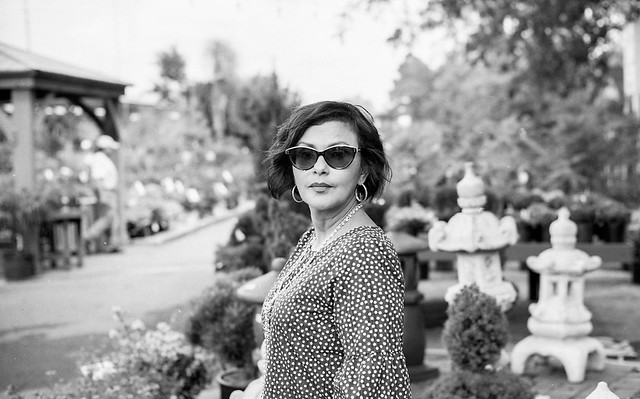
Could I reproduce this photo with another camera? Yes. Would I have taken it in the first place with another camera? Likely not. With 50mm framelines you have the luxury of a larger field of view while looking through the viewfinder. I was initially framing the background but saw my wife starting to enter the frame from the right. So I pivoted to place the focus patch on her, focused, pivoted back to my desired frame, called her name when she reached the center of the frame, and snap. I love this photo. Not only is it a lovely photo of my wife it was also the first time I really “got” the whole rangefinder thing.
And it is not a fluke. Last week Durham artist Derrick Beasley was providing an overview of his exhibition’s themes and as he was talking I pre-visualized three pics, with the 7Artisans 50mm f/1.1. And thankfully he played along.


Also took this one.

Now after this is where I used to think I would have been better served with a more “traditional” digital solution out and about. But it would seem that I have spent enough time using rangefinder cameras now that a lack of autofocus is no longer an issue. Which is good since I stopped carrying around multiple solutions and made myself commit to one. And I did just fine. Whether with rangefinder focusing…


…or zone focusing.


So what I thought would be a niche tool for limited occasions has become my everyday carry along. I took a look at my Flickr numbers and sure enough in less than a year I have over half as many keepers as I have in a prior favorite’s album that I owned for years, the Pentax K-1. This is surprising to me and not what I expected at all.
But this is a very personal thing that most likely does not apply to many. I would never give anyone advice to follow the same steps. I would not bother to argue with anyone who said that a Leica Mbody does not make any sense. On paper, I agree. But in hand, I had a different outcome.
There is good news if you are wondering if the same would apply to you. If you did decide to purchase a Leica M body at least they hold their value well. A year in and this camera is still going for the same price. If I felt I had made a mistake it would be relatively easy to bail. But I am good thank you very much.
One massive caveat before I close.
I have stated this before, but this post is in reference to personal work. “Real” work? I am reaching for my Sony kit, or whatever your primary AF having brand of choice may be including Leica, every time. Mainly because it is not about me or my artistic inclinations or intentions. I just need the photos. I want all the things. High speed synch, TTL, blazing fast AF, zoom lenses, etc.


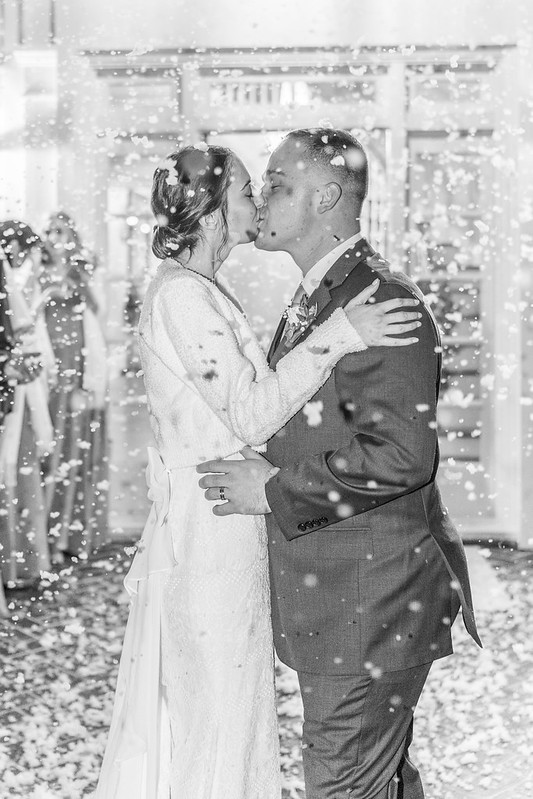

That being said kudos to those who do use Leica rangefinders for their work. Good for them. I am very impressed. Not there yet. But on my own time?…
100% digital rangefinder goodness my friends.
(All photos below were taken with the far better than it has any business being at a fraction of the superior but it better be blindingly more expensive Leica original 7Artsans 75mm f/1.25.)


So back to my closing question from a prior post.
Do I recommend this lens?
I usually back away from an outright endorsement for any gear, but that is not the case here. If you have a digital M mount rangefinder camera this is as close to a no brainer as I have ever seen. Yes. I recommend this lens.
Happy capturing.
-ELW


 Eric L. Woods
One Reply to “Started As A TTArtisans 28mm f/5.6 Review Addendum… Ended Up Being An Ode To Native M Photography”
Comments are closed.